printable hand and foot card game rules pdf
Hand and Foot Card Game Rules: A Comprehensive Guide
Hand and Foot, a Canasta variant, boasts numerous rule variations; printable PDFs detail setup, melds, and scoring for this engaging North American card game․
What is Hand and Foot?
Hand and Foot is a captivating card game deeply rooted in the traditions of Canasta, yet possessing a unique identity all its own․ Players navigate the game utilizing two distinct sets of cards – the “Hand,” played initially, and the “Foot,” brought into play once the Hand is exhausted․ This dual-card system introduces a strategic layer absent in simpler rummy-style games․
Crucially, Hand and Foot isn’t governed by a rigid, universally accepted rulebook; instead, it thrives on adaptation and personalization through “house rules․” Printable rule sets, often available as PDFs, attempt to codify common variations, providing a starting point for groups․ These documents typically cover everything from card values and melding requirements to optional rules, ensuring a shared understanding amongst players before commencing a game․ The game’s popularity stems from its blend of strategy, partnership play, and social interaction․
History and Origins of the Game
Hand and Foot’s lineage traces back to Canasta, a popular card game that emerged in the 1950s․ While Canasta’s origins are debated, Hand and Foot developed as a North American adaptation, gaining traction as a more complex and extended version of its predecessor․ The precise evolution remains somewhat shrouded in anecdotal history, largely due to the game’s reliance on informal, localized “house rules․”
Unlike games with codified regulations, Hand and Foot spread through word-of-mouth and community play․ Consequently, printable rule PDFs serve as attempts to standardize gameplay, capturing common variations circulating amongst different groups․ These documents reflect the game’s organic growth, showcasing how players have modified and refined the rules over time․ The game’s enduring appeal lies in its adaptability and the social element fostered by collaborative rule-setting․
Number of Players and Teams
Hand and Foot is most commonly enjoyed by four or six players, organized into partnerships of two teams․ However, the game’s flexibility, often detailed in printable rule PDFs, allows for variations accommodating different group sizes․ While less frequent, it can be adapted for three or even five players with adjusted rules for team formation or individual play․
The team dynamic is central to the gameplay, requiring collaboration in melding cards and strategic discarding․ Printable guides often emphasize the importance of communication within teams, though explicit signaling is typically prohibited․ The number of decks used is directly tied to the player count; generally, one deck per player is standard, ensuring sufficient cards for both the “hand” and “foot” portions of each round․ These PDFs clarify these player-dependent adjustments․
Required Materials (Decks of Cards, Score Sheets)
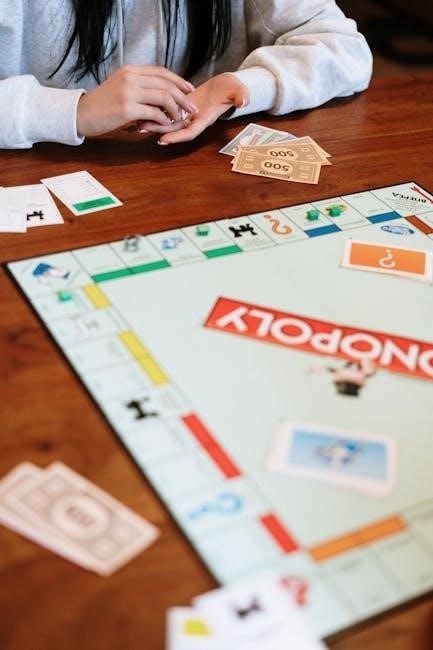
To embark on a Hand and Foot adventure, several materials are essential, often outlined in readily available printable rule PDFs․ The core component is, naturally, decks of standard playing cards – typically multiple decks are needed, with one per player being a common guideline․ These PDFs specify the exact number based on player count, ensuring sufficient cards for both the “hand” and “foot”․
Beyond the cards, dedicated score sheets are crucial for tracking points across rounds․ Printable versions often include pre-formatted tables for easy calculation of card values, bonus points, and penalties․ Pencils or pens are also necessary for recording scores․ Some players prefer using digital scorekeeping apps, but traditional paper sheets remain popular․ Detailed PDFs often provide sample score sheets for convenience․

Setting Up the Game
Printable Hand and Foot rules PDFs detail initial card arrangement, dealing procedures for both the hand and foot, and establishing the stockpile and discard pile․
Dealing the Cards (Hand and Foot)
Printable Hand and Foot rules PDFs comprehensively explain the dealing process, which is central to gameplay․ Typically, each player receives a hand of eleven cards and a foot of eleven cards, dealt separately․ These PDFs illustrate how to distribute cards from multiple decks, often utilizing one deck per player, especially with larger groups․
The rules clarify that the hand is played before the foot; once a player exhausts their hand, they begin playing with their foot․ Detailed PDFs often include diagrams showing the correct card distribution and emphasize the importance of keeping the hand and foot separate throughout the initial stages․ They also specify that dealing proceeds clockwise around the table, ensuring fairness and consistent gameplay for all participants․ Understanding this initial deal is crucial for a smooth game experience․
The Stockpile and Discard Pile
Printable Hand and Foot rules PDFs meticulously detail the function of the stockpile and discard pile, essential components of the game․ The stockpile, formed by combining multiple decks, serves as the draw source for players․ These PDFs illustrate how cards are drawn from the stockpile during a player’s turn, replenishing their hand․
Conversely, the discard pile accumulates cards discarded by players after their turns․ Printable guides emphasize that players must discard one card at the end of each turn, adding it face-up to the discard pile․ They also clarify rules regarding picking up the entire discard pile, often requiring a specific meld to do so․ Understanding these dynamics, as explained in the PDFs, is vital for strategic play and managing card flow throughout the game․
Initial Card Arrangement
Printable Hand and Foot rules PDFs clearly outline the initial card arrangement, a crucial step for game commencement․ Typically, each player receives a “hand” of eleven cards and a “foot” of seven cards, kept separate until the hand is depleted․ These PDFs visually demonstrate how cards are dealt, often specifying a clockwise distribution from the dealer․
The guides emphasize keeping the hand and foot concealed from opponents․ They also detail the arrangement of the stockpile and discard pile, usually placed centrally for all players to access․ Printable resources often include diagrams illustrating the setup, ensuring clarity for beginners․ Correct initial arrangement, as detailed in these PDFs, establishes a fair and organized foundation for a competitive and enjoyable Hand and Foot game․
Gameplay Mechanics
Printable Hand and Foot rules PDFs explain turns involving drawing, melding, and discarding, mirroring Canasta; strategic play utilizes both the hand and foot cards․
Turns and Actions (Drawing, Melding, Discarding)
Detailed printable Hand and Foot rule sets comprehensively outline each player’s turn sequence, beginning with drawing either from the stockpile or the discard pile—though specific rules govern discarding pile draws․
Melding, central to gameplay, involves laying down matching card combinations (books) as detailed in the PDF guides; these combinations vary based on card rank and color․
Players must meet minimum meld requirements before playing their ‘foot’ (second hand), as clarified in printable guides․
Finally, each turn concludes with discarding one card, strategically chosen to avoid aiding opponents, a nuance thoroughly explained within the downloadable rule PDFs․
These PDFs emphasize understanding these actions for successful gameplay․

Melding Rules and Combinations
Printable Hand and Foot rules PDFs meticulously detail valid meld combinations, mirroring Canasta’s core principles but with unique twists; these guides specify minimum card counts for each meld type․
Common melds include books of sevens, red threes, and matching card ranks, with wild cards (twos) strategically substituting for missing values—the PDF clarifies wild card usage․
Initial meld requirements, often higher for the first meld of a round, are clearly outlined in downloadable rule sheets․
Building upon existing melds is permitted, and PDFs illustrate how to add cards to established books․
Understanding these combinations, as presented in the printable guides, is crucial for maximizing scores․
Going Out and Ending a Round
Printable Hand and Foot rule PDFs comprehensively explain the conditions required for a player to “go out,” effectively ending the round; typically, this involves emptying both the hand and foot through legal melds and discards․
These guides detail specific requirements, such as needing to have made at least one book during the round․
A player cannot go out if their partner still has cards remaining․

The PDF clarifies procedures for when a player attempts to go out but fails to meet the criteria, often incurring penalties․
Once a player goes out, the round concludes, and scoring commences, as detailed within the downloadable rule sets․

Scoring System
Printable Hand and Foot PDFs outline card values, bonus points for books, and penalties; detailed scoring guides ensure accurate round calculations for players․
Card Values (Points per Card)
Printable Hand and Foot rules PDFs comprehensively detail the point values assigned to each card, crucial for accurate scoring during gameplay․ Typically, red threes are worth a substantial 100 points each, acting as immediate bonuses when melded, and also carry a penalty if left in a player’s hand at round’s end․ Black threes, conversely, prevent opponents from picking up the discard pile․

Wild cards – twos – are generally valued at 20 points, offering flexibility in melding but also potential penalties․ Face cards (Kings, Queens, Jacks, and Tens) are commonly worth 10 points apiece, while numbered cards (4 through 9) retain their face value․ Aces are usually assigned a value of 20 points․ These printable guides often include a clear table summarizing these values, ensuring all players understand the scoring system before commencing a game, minimizing disputes and maximizing enjoyment․
Bonus Points and Penalties
Printable Hand and Foot rules PDFs meticulously outline bonus points and penalties, significantly impacting final scores․ Achieving a “Canasta” – melding all cards of a single rank – awards a substantial bonus, often 500 points for a natural canasta (no wild cards) and 300 for a mixed one․ Completing multiple canastas further amplifies the bonus․
Conversely, penalties apply for cards remaining in a player’s hand at round’s end․ Red threes incur a hefty 100-point penalty each, while wild cards (twos) are penalized at 20 points apiece․ Other cards typically carry their face value as a penalty․ Printable guides often detail bonuses for “going out” – emptying one’s hand and foot – and penalties for failing to meet minimum meld requirements, ensuring fair and consistent scoring throughout the game․
Calculating the Round Score
Printable Hand and Foot rules PDFs provide clear instructions for calculating each round’s score, a crucial step for determining the overall winner․ Teams tally points from melded cards, applying card values detailed in the guide – typically face value for numbered cards, 10 for face cards, and 20 for aces․ Bonus points earned from canastas, going out, and completing specific meld requirements are then added․
Subsequently, penalties for unmelded cards in hands and feet are subtracted․ The team’s total round score is then recorded on a score sheet, often included within the printable PDF․ Cumulative scores across multiple rounds determine the ultimate victor, usually the first team to reach a predetermined point threshold, like 5,000 or 10,000․

Variations and House Rules
Printable Hand and Foot PDFs acknowledge the game’s flexible nature, often listing commonly used variations and guidance for adapting rules to player preferences․
Commonly Used Variations
Many printable Hand and Foot rule sets detail popular variations beyond the basic gameplay, acknowledging the game’s adaptable spirit․ One frequent adjustment involves modifying the minimum meld requirements for initial plays, impacting strategic timing․ Some groups implement a “wild card” rule, allowing Jokers – or designated cards – to substitute for any value, accelerating melding but potentially increasing risk․
Another common variation concerns the “red three” penalty; often, playing a red three incurs a point deduction, encouraging strategic holding․ Printable guides frequently outline optional rules regarding going out, such as requiring a complete discard of both the hand and foot, or allowing a player to go out with wild cards․ Furthermore, variations exist in bonus point structures, rewarding specific meld combinations or penalizing incomplete hands at round’s end․ These printable resources serve as excellent references for establishing consistent house rules, ensuring fair and enjoyable gameplay for all participants․
Adapting Rules for Different Player Counts
Printable Hand and Foot guides often address rule adjustments based on the number of players, as the game scales differently with varying team sizes․ While typically played with four or six, adaptations for two or three players are common․ For smaller groups, adjustments to the number of decks used are crucial to maintain card availability and game flow․
These guides frequently suggest modifying the initial deal size or the required meld counts to suit fewer players, preventing prolonged rounds or card shortages․ Team dynamics also shift; with two players, each individual manages both a hand and a foot independently․ Printable resources clarify these adjustments, ensuring balanced gameplay regardless of participant count․ They may also detail how to handle situations where a player is unable to meld, offering alternative actions to keep the game moving․ Ultimately, these adaptations ensure Hand and Foot remains enjoyable with any group size․